Property Occupancy Tracking: Maximize Your Rental Income
In the world of rental property management, an empty unit is the silent killer of profitability. While you might be focused on collecting rent from current tenants or fixing leaky faucets, a vacant unit is quietly draining your potential revenue every single day it sits empty.
To build a truly profitable portfolio, you need to go beyond just filling units—you need to master property occupancy rate tracking. Understanding not just if your units are full, but how often they are full over time, is the key to maximizing rental income and identifying hidden problems in your business model.
Whether you manage a single boarding house or a multi-unit apartment complex, rental occupancy tracking is the metric that tells you the true health of your investment.
Understanding Occupancy Rates and Why They Matter
Your occupancy rate is simply the percentage of your rentable units that are currently occupied by a paying tenant.
It sounds basic and obvious, but it is the most honest report card for your business. A high occupancy rate (95%+) generally means your pricing is right, your property is desirable, and your tenant retention is strong. A low or fluctuating occupancy rate is a red flag that requires immediate investigation. Is the rent too high? Is the property condition poor? Is your marketing failing?
Without tracking this metric, you are flying blind. You might feel "busy" managing tenants, but if you are consistently running at 80% occupancy, you are leaving 20% of your revenue on the table—revenue that requires almost zero additional effort to collect once the tenant is in place.
The True Cost of Vacant Units
Most landlords underestimate the cost of a vacancy. They think, "I'm just missing out on $1,000 rent this month."
But the cost of a "turnover" is actually much higher. When a unit sits empty, you are hit with a "Triple Threat" to your cash flow:
- Lost Revenue: The direct rent you aren't collecting.
- Carrying Costs: You still have to pay the mortgage, property taxes, insurance, and utilities (which the tenant usually covers).
- Turnover Expenses: Marketing costs, cleaning fees, repairs, and the time cost of showing the unit.
The Math of Vacancy: If you rent a unit for $1,200/month, a single month of vacancy doesn't just cost you $1,200.
- Rent Loss: $1,200
- Utilities (Electric/Water/Heat): $150
- Marketing & Admin: $100
- Cleaning/Paint Touch-up: $200
- Total Loss: $1,650
If this happens once a year per unit, your effective annual income drops significantly. Vacancy rate reduction isn't just about "looking full"—it's about stopping this financial bleeding.
How to Calculate Occupancy Rate
To take control, you need to measure it. There are two ways to calculate this: Physical Occupancy and Economic Occupancy.
1. Physical Occupancy Rate (The Snapshot)
This tells you how many heads are in beds right now.
(Number of Occupied Units / Total Number of Units) x 100
- Example: You manage a 10-unit building. 8 units have tenants.
- (8 / 10) x 100 = 80% Occupancy.
2. Economic Occupancy Rate (The Revenue Reality)
This is the more advanced—and more important—metric. It measures the rent you actually collected versus the rent you could have collected (Gross Potential Rent).
(Total Rent Collected / Gross Potential Rent) x 100
- Example: Your 10 units should generate $10,000/month. 2 are empty ($2,000 loss). One tenant is occupied but hasn't paid rent ($1,000 loss).
- Income Collected: $7,000.
- Potential: $10,000.
- Economic Occupancy: 70%.
Notice the difference? Physical occupancy says you are 80% full, but your bank account is only 70% full. Economic occupancy reveals the "bad debt" or non-paying tenants that physical occupancy hides.
Identifying Occupancy Trends
Tracking this data over time reveals patterns that gut feelings miss.
- Seasonality: Do vacancies spike in December? (Maybe avoid ending leases in winter).
- Unit Specifics: Is Unit 4 always empty? (Maybe it has a noise problem or needs renovation).
- Turnover Time: Does it take 3 days to fill a unit, or 3 weeks?
If you track this manually, you won't see these trends until it's too late. You need a system that visualizes this data for you.
Strategies to Reduce Vacancy
Once you know your numbers, you can improve them. Here are three proven strategies:
1. Proactive Lease Renewals
Don't wait until the lease ends to ask if they are staying. Contact tenants 90 days before expiration. Offer a small incentive (e.g., a free carpet cleaning or a lock-in rate) to sign early. A renewal costs you $0 in marketing and downtime.
2. Streamline Maintenance
The #1 reason tenants leave is poor maintenance response. If you fix leaks fast, tenants stay longer. Long-term tenants are the foundation of high occupancy rates.
3. Faster Turnover Process
Shrink the gap between "Tenant A moves out" and "Tenant B moves in." If you can reduce your turnover time from 14 days to 3 days, you gain 11 days of rent.
Dashboard Metrics for Occupancy Monitoring
You shouldn't have to calculate this yourself every month. Your property management dashboard should answer these questions instantly:
- Current Occupancy: What % is full today?
- Upcoming Vacancies: Who is moving out in the next 30-60 days?
- Average Stay Duration: How long do tenants stick around?
- Vacancy Loss: How much money did I lose to empty units this year?
How Sublop Tracks Occupancy Automatically
Sublop turns occupancy tracking from a math problem into a growth engine.
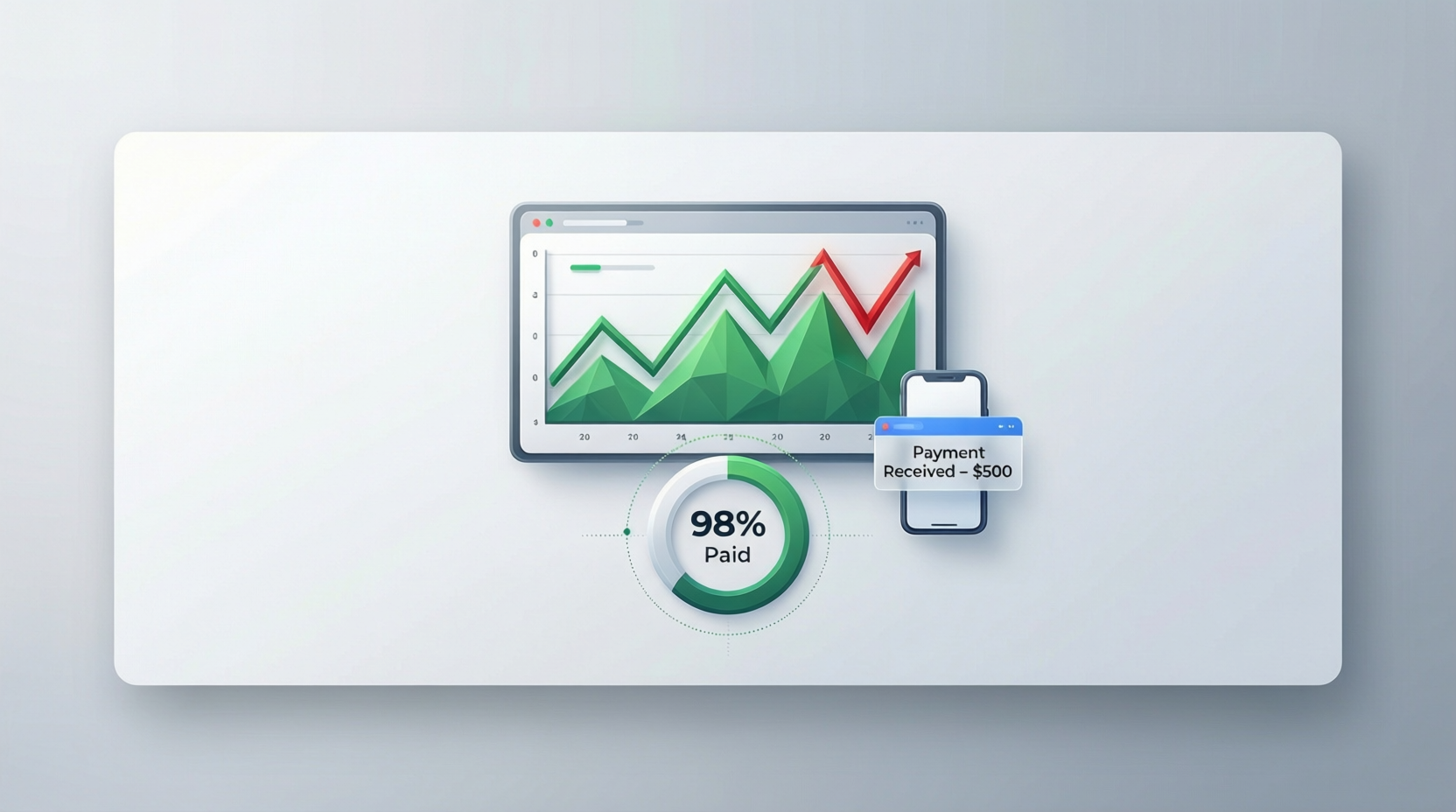
- Real-Time Dashboard: Log in and see your exact occupancy percentage instantly. No spreadsheets required.
- Expiry Alerts: Sublop highlights leases that are ending soon, prompting you to start renewal conversations before the unit goes vacant.
- Historical Reports: Look back at last year. Did you have a dip in the summer? Use that data to plan better marketing campaigns this year.
- Unit Status: See at a glance which units are "Occupied," "Vacant," or "Under Maintenance."
By automating this tracking, Sublop helps you shift from a reactive mindset ("Oh no, a unit is empty!") to a proactive one ("I have a vacancy coming up in 30 days, let's fill it now.").
Setting Occupancy Goals
You should aim for 95% Physical Occupancy. 100% is actually not always ideal—if you are always 100% full with a waiting list, your rent might be too low! You should have a little turnover to allow for market rent adjustments.
However, you should aim for 100% Economic Occupancy—meaning every occupied unit is paying full rent on time.
Stop Leaving Money on the Table
Your rental properties are a business, and occupancy is your efficiency rating. Stop guessing how full you are and start managing with precision.
Track your occupancy in real-time and maximize your rental income. Start your free 30-day trial with Sublop today.